
As the sun sets on your epic summer travels, it’s time to bid farewell to your trusty travel trailer…for now. While winterizing may be your initial concern, there’s a crucial puzzle piece you can’t afford to overlook: finding the ultimate storage location.
Picture this – a sanctuary that will safeguard your precious trailer until the next adventure beckons. But beware! The wrong choice could unleash a cascade of costly repairs and endless headaches.
Fear not, intrepid traveler, for we have the key to unlocking the secret realm of ideal travel trailer storage. Get ready to unravel the mysteries, secure your nomadic companion, and ensure a seamless return to the open road. Embark on this journey with us and make your storage selection a triumphant success!
So, where should you store your travel trailer? If you have enough room in your private residence, then you should store your trailer at home. Check with your county or city zoning office and your Homeowners Association to see if there are any restrictions on storing your travel trailer at home. If there are no restrictions, feel free to park it in your garage, driveway, or backyard. If you don’t have enough space at home, you can find a storage space for hire in your local area and use it as a storage site. Depending on your budget, you can choose between indoor and outdoor storage.
This article discusses everything you need to know about storing your travel trailer. Read on to learn more.
Why Should You Store Your Travel Trailer?
Storing your travel trailer safely during the winter period will protect it from adverse weather conditions and ensure everything is okay when you are ready to hit the road again.
Rain, snow, and extremely low temperatures common during winter can cause extensive damage to the inside and outside of your travel trailer. Without proper protection, the harsh weather elements will rip off your trailer’s body paint and damage the engine’s moving parts.

There are two main options for storing your travel trailer; a private residence or a commercial facility. Each option has its own pros and cons that we shall discuss. The best option for you depends on your needs and preferences.
Storing Travel Trailer- The Options
Now that you understand why it is essential to store your travel trailer safely during winter, it is time to figure out the different storage options you have.
1. Storing Your Travel Trailer at Home
Perhaps, the most obvious travel trailer storage option is your own property. If you stay on a property that you fully own with no restrictions, this will most likely be the perfect option for you.
Remember that we are not talking about condos or other types of properties that have Homeowners Associations with rules prohibiting travel trailers from being stored on-premise.
As long as there is enough space on your property, don’t go looking for commercial storage facilities because you can keep a close eye on your trailer right at home.
Storing your travel trailer at home will save you a lot of money because you won’t be paying the storage fee to anyone. In fact, that is the major driving factor in making important decisions, such as where to store your travel trailer off-season.
If you store the car in any commercial facility, you need to know that you are going to pay for it. You will part with anything between $50 and $200 per month if it is outdoor storage. The bigger your travel trailer is, the more you will end up paying.

The other important reason you should consider storing your travel trailer at home is the long-term care of the car. If you cannot afford to pay more than $100 a month to store your trailer in a heated indoor facility, you may be better off with the car in your compound where you can take care of it yourself.
If the car is left to sit in an outdoor facility throughout winter, both the interior and exterior of your vehicle will take a beating. While you can always visit the facility every month to check on your car’s condition, there isn’t much you can do about it.
Where Can I Store My Travel Trailer at Home?
Typically, the size of your trailer will determine where you can store it at home. If your trailer is relatively small and can fit in your garage, then that will be the perfect storage spot. This way, you will protect it from severe weather elements and avoid any restrictions on outdoor storage.
The only disadvantage of storing the trailer in your garage is that it will take up a huge amount of storage space that you may have used to store other items.
If your trailer cannot fit in your garage, the driveway becomes the next destination. Find a suitable spot on the driveway, park it there and cover it adequately.
The only disadvantage of storing your trailer on the driveway is that it exposes it to harsh weather elements. Therefore, it is always good to invest in a travel trailer cover or carport to keep it protected.

You can also identify a perfect spot in your backyard and park your trailer there. However, this option will largely depend on the size of your backyard. If yours is large enough to accommodate the trailer, you could be staring at free storage space.
Like driveway storage, backyard storage leaves your car exposed to adverse weather elements, but you can mitigate that by investing in a good quality trailer cover or carport.
2. Storing a Travel Trailer at a Commercial Storage Facility
If the above options aren’t possible for you, you need to find a commercial storage facility near you and store your travel trailer there.
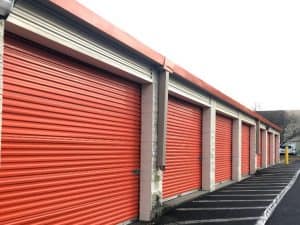
Travel trailer storage facilities are common in all major cities and towns, with options to accommodate a wide range of budgets and storage needs. These facilities usually offer heightened security features and additional options for indoor heating, regular inspections, and maintenance to keep your car in excellent condition.
But the biggest downside of commercial storage facilities is the rates. Sometimes, you may be forced to pay a relatively high monthly storage fee to enjoy the added features. Furthermore, you cannot access and inspect your trailer at will because it is under someone else for the entire time it will be in the storage facility.

The risk of collision damage is also greater in some storage facilities, which might force you to purchase comprehensive insurance on your travel trailer for unprotected spaces.
Although some commercial storage facilities offer limited liability coverage for an additional fee, you cannot depend on it should something happen to your baby.
Commercial Storage Facility Options
If you don’t have enough space at home or the HOA rules don’t allow you to store your travel trailer on your premises, you will be forced to choose between indoor and outdoor commercial storage facilities. Each option has its own pros and cons that will influence your decision.
a) Outdoor storage facilities
Outdoor storage is the cheapest option because your travel trailer is parked in the open alongside other campers. The monthly charges range from $30 to $100+ depending on your vehicle’s size and whether the parking space is covered or uncovered.
The difference between uncovered and covered spaces is that covered spaces tend to reduce the risk of weather damage and collision damage. It is pretty easy to find an outdoor storage space for almost every travel trailer size.
Besides weather damage, the other disadvantage of outdoor storage units is that rodents and insects can find their way into your trailer, causing extensive damage to your cushions, furniture, and electrical components.
b) Indoor storage facilities
Indoor storage facilities offer more security to your travel trailer, but they are more expensive. Your trailer will be safe from weather damage and the risk of collision damage, but you should expect to pay anything between $100 and $500+ every month.
Indoor storage facilities can be heated or unheated. Unheated facilities are relatively affordable than heated ones, but there may be limited space for travel trailers. So, if you are looking to store your travel trailer in a heated indoor storage facility, ensure you identify and book one early enough to avoid a last-minute rush.

Some advanced indoor storage facilities even offer extra amenities like having staff on-site to assist travel trailer owners by running backup generators, alerting the owner if something isn’t working properly, and checking your entire trailer systems and dumping tanks.
Indoor storage facilities range from simple private garage-sized spaces to massive warehouses with designated travel trailer parking. Before you store your trailer at an indoor storage facility, check with your insurance company on the possibility of your storage protection.
Final Thought
Once you have decided where to store your travel trailer, take time to prepare it for the winter. With your vehicle set to go for a relatively long time without being on the road, there is still much more that needs to be done.
Therefore, winterizing your travel trailer before storage is compulsory. If you cannot prepare the trailer yourself, find an experienced professional to help you with the process.
We hope you have learned critical lessons on storing your travel trailer, and you are now ready to store your baby safely for winter.