
Every precious gem and delicate piece deserves to shine for a lifetime. Don’t let improper storage dim their brilliance. Discover the hidden world of jewelry organization as we unveil the secrets to safeguarding your treasures. From preventing tarnish to protecting against accidental breakage, our expert tips and tricks will empower you to become a curator of elegance.
Say goodbye to tangled necklaces and scratched surfaces as we guide you through the art of storing and organizing your jewelry at home. Get ready to unlock the realm of jewelry preservation and embark on a journey of timeless allure.
Jewelry tarnishes most easily in moist and humid conditions. Therefore, the best practice for storing your jewelry at home is to ensure the storage is in a dark and dry location and that the pieces are not allowed to rub against one another.
This article will cover everything you need to know to properly store your jewelry, including the best practices for doing so and which storage holders are best for keeping your delicate jewelry in perfect shape.
How to Keep Jewelry from Tarnishing
One of the most important aspects of storing jewelry is ensuring that your pieces don’t tarnish. Tarnishing happens when jewelry repeatedly comes into contact with some type of moisture, be that water or simply just the oil on your skin. Therefore, the first part of storing jewelry properly is doing so in a dry location, where no moisture will come into contact with the metal.

Secondly, the jewelry should only be stored with other pieces of the same metals. When different metals are kept in close proximity, the interactions between the two can cause tarnishing. less delicate pieces can be stored in plain sight without running into the risk of tarnishing.
Otherwise, the exact storage process of your jewelry depends on the metal and precious stones.
How to Store Jewelry at Home
As hinted at above, how you actually store your jewelry at home will depend on the metal and precious stones you have. These next few sections will go into more detail about how to put away specific pieces of jewelry.
How to Store Gold Jewelry
Ideally, gold jewelry should be stored individually away from all other pieces. The metal can easily be scratched. The best way to store and protect your gold jewelry is by placing each piece in an individual cloth bag. These bags often come with jewelry purchases or can be found online or in your local jewelry store. The bag’s purpose is to keep the pieces away from too much moisture while protecting against scratches.
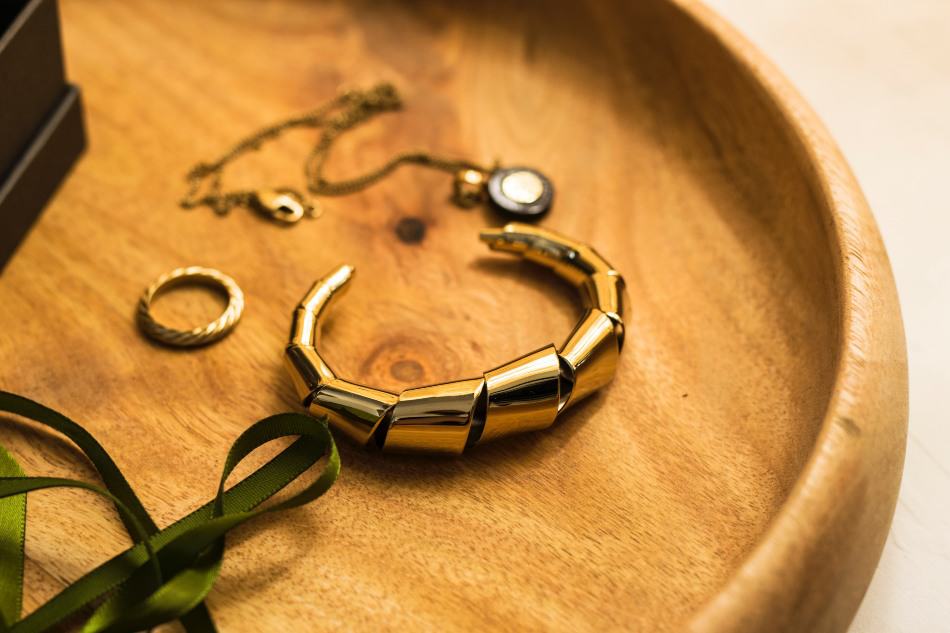
Another option is a multi-purpose jewelry box with dedicated compartments for storing certain pieces. However, we still recommend using a cloth bag in a jewelry box just for extra protection.
How to Store Silver Jewelry
Like gold jewelry, silver jewelry can easily be scratched and should be kept away from other pieces entirely in a cloth bag or specific jewelry compartment. Ensure that your silver pieces are not exposed to air either, as this can cause tarnishing to happen. A sealed plastic bag may be a suitable option for storing your silver.

How to Store Diamonds and Other Precious Stones
Diamonds are very strong gemstones and can’t easily be scratched or damaged. However, they can very easily scratch other gemstones or metals in your jewelry box. Therefore, diamonds themselves don’t need to be specifically kept in a cloth bag, but it may be a good idea to prevent any possible mixing.

Softer gemstones that are most at risk for scratching include pearls and opals. Be sure to pay extra attention to these materials when storing your jewelry! Give them additional protection in a cloth bag away from other metals that could possibly cause damage.
The Best Ways to Organize Your Jewelry
Keeping your jewelry organized is an important step in ensuring that nothing is tangled, lost, or broken! Organization also helps you find the pieces you’re looking for without having to ruffle through your entire jewelry box each morning.
We recommend investing in a jewelry box with designated compartments or a jewelry rack for hanging larger pieces such as necklaces and earrings. Avoid placing all jewelry into a catch-all dish or drawer; this can result in scratching, tarnishing, and tangled parts.

Below are a handful of tips to help get you started with organizing your jewelry at home:
- Separate everyday pieces from fancier jewelry. When organizing and storing your jewelry, keep everyday pieces in an easily accessible area. You’ll want to avoid touching more delicate jewelry as much as you can, as the oil from your fingers can cause tarnishing. Store fancier jewelry further away while keeping everyday jewelry nearby for getting ready.
- Store jewelry based on type. Another great way to stay organized is to separate jewelry by type before sorting. Designate areas for your rings, earrings, and necklaces, while other areas may hold bracelets and brooches. You may also consider separating based on the metal or gemstone. As mentioned earlier, the mixture of different metals can cause both scratching and tarnishing.
- Clean all jewelry before storing. Take this time to make a mental inventory of your jewelry. See if anything needs to be repaired or polished. Now’s also a great time to give your pieces a light cleaning and refreshing before storing them away for the time being.
- Pay special attention to your finer pieces. Though this may be a no-brainer, spend extra time ensuring that your more delicate and more expensive jewelry is stored properly away from moisture and in scratch-proof places. Costume and everyday jewelry don’t require as much of a headache when putting them away, but the expensive stuff is expensive for a reason.
DIY Storage for Jewelry
While we recommend investing in a jewelry box or rack for finer pieces, if you find yourself with a lot of jewelry, it may be easier to DIY your storage system. Creating storage for your jewelry is actually incredibly easy and can be done without spending too much money.
Below are a few tips for DIY’ing your jewelry storage:
- Visit a container store. One way to get many containers for not a lot of money is by visiting a local container store. Purchase different sizes of boxes to hold different types and metals of your jewelry. This is an excellent strategy for less expensive pieces; finer jewelry may scratch when stored in containers.
- Look secondhand. A lot of the time, people are selling old jewelry boxes or racks online for a very low price. A great way to save some money while still getting proper jewelry storage is by checking out websites like eBay and Craigslist for deals. You can also ask your family and friends to see if anyone has an extra jewelry box!
- Use a corkboard. Though it may not be the most glamorous option, you can DIY a hanging jewelry rack by placing push pins into a corkboard and hanging your necklaces or earrings on the pins. This should be reserved for inexpensive or costume jewelry, as the exposure to the air could cause damage to your finer pieces.
- Use Ziploc bags. Keeping fine jewelry away from air and moisture is imperative, and you may not have access to tons of cloth bags. Instead, use Ziploc bags to keep your pieces unexposed. This won’t protect against scratching, but it will at least keep out unwanted moisture.
Final Thoughts
Storing your jewelry at home doesn’t have to be a complicated process. The most important thing is ensuring that your jewelry won’t be scratched or tarnish. Once you’ve learned the basics of separating metals and proper storage, you can even DIY your own jewelry boxes and racks.