
Do you know you can convert your simple homeroom into cold storage? Understanding the requirements puts you in a better position to build cold storage on your own or seek professional help if necessary.
Cold storage allows you to store various things ranging from vegetables, fruits, meat, and flowers, among others. Sadly, not each room can be converted into cold storage. Therefore, keep into consideration the following things before choosing the best-suited room:
- Space availability is crucial, especially when setting up a cold storage room. Therefore, go for the biggest available room as it allows you to store a large number of items when compared to a smaller room.
- Electricity connection- A cold storage room can’t correctly function if there is limited electricity connection at any given time. As a result, choose a room with a proper electric connection for a cold room.
- How easy is it to install cooling units in a room? – This is another important thing worth considering before setting up a storage room. A room that is easy to install cooling units gives you an easy time setting up everything.
Why is a Cold Storage Important?
Some products are easily perishable or sensitive, especially if they stay at room temperatures for a long time. However, cold storage increases the shelf life of products, making them fresh for a long time.

Adjust the right temperature in your cold storage room and store your products there. A cold storage room is different from regular storage mainly because of the cold temperature. Some products stored under room temperatures attract pests and molds. Others might change in texture, color, and even taste.
Consider cold storage at your home since it prevents food poisoning, common for products stored under room temperature. Cold storage also ensures you enjoy fresh vegetables and fruits for a long time.
How Does a Cold Storage Operate?
Cooling storage increases the shelf life of products through four main functions, namely:
- By reducing wilting and internal water loss. Water loss makes products wilt before going bad, especially vegetables and fruits. Therefore, the reduction of water loss increases shelf life.
- By reducing degradation by enzymes and also respiratory activity.
- By inhibiting the growth of decay-producing organisms. These organisms are generally are inactive or slow under cold storage.
- By reducing the production rate of ethylene, a natural ripening agent. This ensures raw products stay that way for the longest time possible.
Setting up Cold storage from a simple room
Generally, cold storage allows you to adjust the temperatures, depending on what you are storing. This kick starts by connecting electric circuits to either a window AC or normal split AC units.
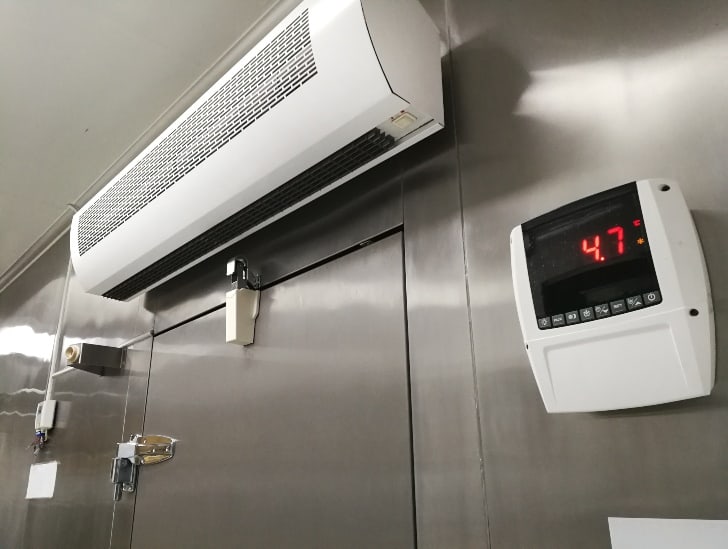
Once connected, the Ac unit can lower the temperatures up to 32 degrees Fahrenheit. Generally, you can have two types of rooms, namely:
- A cold storage with a temperature of between 53 to 65 degrees Fahrenheit. Such temperatures are recommended for storing vegetables and fruits.
- A storage room with temperatures ranging between 32 to 50 degrees Fahrenheit. Meat, flowers, dairy products, and beer are some products that can be stored under such temperatures.
Converting a Room into a cold room with 32 to 50 degrees Fahrenheit
Start by plastering all the walls and the floors of the space you intend to convert into cold storage. Afterward, apply preferably thermal coating on the walls. It improves insulation when setting up cold rooms.
Also, the thermal coating helps maintain a temperature between 32 to 50 degrees Fahrenheit while minimizing energy loss. There is also an option of using stainless steel inner walls, but it should be after installing the thermal coating on the room’s walls.

Now, install the Window AC or the Split AC unit after calculating the size of the cold storage room. Each room has a specific number of units and capacity at large. Next, install shelves and anything vital to storing your products once the room is ready.
Setting up a cold room with 53 to 65 degrees Fahrenheit
You can only convert a room to temperatures between 53 to 65 degrees Fahrenheit if it isn’t exposed to extreme temperature levels, specifically the outer walls. Depending on your location, you might not be required to modify the walls of the selected room.
However, consider thermal coating inside the wall to minimize electricity waste and prevent heat loss. A normal plastering might also work, preferably for brick walls. Now, install the AC units in the selected room, depending on the required temperature range and the room’s size.
The Advantages of setting up cold storage at home
Are you contemplating whether to set up cold storage or not in your comfort zone? If yes, below are some advantages:
- It is pocket-friendly compared to renting cold storage at a warehouse in the long run.
- Cold storage rooms usually conserve energy by up to 50% compared to conventional units.
- You don’t need a high power supply in your house to set up and operate cold storage.
- You can set up a cold storage room at home on your own. Consequently, many technicians have an easy time setting up a cold storage room.
- A room can be customized to satisfy your individual needs.
- You increase the shelf life of your products, especially the easily perishable ones.
Designing Shelves for a cold storage room
Shelves are essential, especially when setting up a cold storage room in your house. Also, it is one of the ways of maximizing the available storage space in a room. There are different types of shelves you can set up in cold storage. It depends on your individual needs and the products you intend on storing.

Open shelves are the commonly used type of shelves for cold storage. They allow you to store various products, which vary in shapes and sizes. Also, you can easily monitor what you have at any given time. Follow the below tips when setting up shelves on your cold storage:
- Identify the products you intend on storing in your cold storage. It determines how the shelves will be set up for safety purposes.
- What is the size of the room? This statement applies to both the size and the height of the room. The bigger the size of the room, the higher the number of shelves that can be installed.
- Store heavy products on the lower shelves. It gives you an easy time retrieving them at any given time.
Maintaining your cold storage room
Hygiene is paramount in your cold storage, especially when storing food products. We will check out cleaning tips and how to maintain your cold storage room.
Cleaning tips
- Clean out any spillage immediately. Most spillage results in a foul smell if not detected on time.
- Dispose of any product in the cold storage room whose shelf life is almos due.
- Avoid using chemicals when cleaning surfaces in the cold room.
- Organize the products in the cold storage in an orderly manner.
Maintenance tips
- Regularly check for cracks in your cold storage room. You should also check out for wear and tear. Cold storage can’t correctly function if there are cracks. Repair any leaks or cracks immediately you spot them.
- Ensure the temperatures are always correct, depending on the products you are storing.
- Regularly clean the blowing fans and the evaporator casing.
- Carry out a system function to ensure the cold storage is appropriately operating.
Molds are one of the problems most cold storage rooms at homes encounter. To prevent this, ensure the cold storage has a fully functioning vent that is regularly cleaned. You should also avoid using wood or paper in your cold storage room. They are an excellent breeding ground for molds.
You should also throw away any expired product stored inside your cold storage to prevent molds.
Why are temperature settings necessary when you have cold storage?
As stated earlier, temperature settings should vary depending on the products being stored in the cold storage room. Therefore, before adjusting the temperature settings, understand the suitable temperatures for products stored inside the cold storage.

The right temperatures increase the shelf lives of products. But, at the same time, choosing the wrong temperatures might spoil food products.
Bottom Line
You no longer have to rent cold storage spaces in warehouses. Instead, convert a room in your home into cold storage. It is pocket-friendly in the long run and allows you to store various products. Above all, cold storage is easy to maintain and operate.