

Your home gym is your sanctuary, your personal haven for staying fit and healthy. But safeguarding your valuable workout equipment is crucial to ensure its longevity and preserve your hard-earned investment.
Join us as we unveil expert strategies for maximizing space, protecting against damage, and organizing your gym gear like a pro. From innovative storage solutions to maintenance tips, this guide has everything you need to create a safe and efficient workout space that will keep you motivated and your equipment in peak condition.
One of the ways to take care of your equipment is by giving them appropriate storage. You don’t want to store your expensive equipment only to come back and find it damaged by mildew, mold, and dust after some time.
Although gym equipment can look rigid and huge, they don’t consume too much space. A corner in your basement or a garage can be perfect for your equipment. As long as you know how to organize everything and utilize the space, everything can turn out perfectly. You also need to do all it takes to keep the equipment safe from pests, dust, and moisture.
There are several ways to keep your gym equipment and get them still looking new even after so many years of storage. Here are seven tips for storing your gym equipment in your home.
1. Think About Your Safety First
While gym equipment does an incredible job of keeping you fit and healthy, they can be dangerous if you don’t know how to handle them. The first thing you need to think about before you start your storage plans is how to safely handle them. Find a perfect way to move them without causing injuries to yourself or the people around you.

If you’re going to lift weights, watch out for back injuries because they’re very heavy. Unless necessary, avoid bending forward or lifting too heavy weights by yourself. Squat down, and lift the equipment close to your body to avoid injuries. If you have someone helping you, lift together and stand at the same time so that you don’t insert too much weight on one person. Make sure they won’t fall in the storage areas as they can hit anyone passing nearby.
2. Clean and Lubricate Before Storage
When in use, various kinds of gym equipment are exposed to sweat, dust, and all kinds of germs. You don’t want to store your items with all these germs and moisture because that way, you’re going to expose them to damage right away. You need to clean everything properly before putting them away.

Wipe away all the sweat and dust from visible surfaces and disinfect. For equipment with handles, pay more attention to them. Ensure the items dry properly and grease the ones that need some lubrication, such as exercise bikes and a treadmill. Ensuring they’re clean and dry before putting them away keeps them in better condition throughout the storage period.
3. Disassemble the Parts
If you have large exercise equipment, you need to disassemble all the removable parts before storing them away. Before you start this process, make sure you have the manual for the specific equipment with you. Be careful with every part you’re going to assemble, as you can injure yourself or damage the equipment in the process.
Breaking the equipment down helps you carry and store individual parts with ease. Disassembling also means saving on the storage space since you won’t have to deal with rigid equipment in a small space. You don’t necessarily need to disassemble everything. Also, remember some parts can be pretty easy to disassemble while others might need professional help.
If you have collapsible gym equipment, make sure you compress them to fit into small spaces. To give you an easy time assembling things after ending the storage period, you should carefully mark the disassembled parts. Have all the instructions with you so that you can easily reassemble them when they’re out of storage. If there’s anything that won’t go back to its original state, don’t disassemble it.
4. Find a Good Location
Storing your equipment just anywhere will be like throwing them away. You also need to think about the safety of your precious items in the storage spaces. Store them where they’re protected from extreme weather, theft, and damage. Take your time to research the best storage spaces and conditions for your gym equipment.

While many people will only think about the garage and the basement for storage, they’re not always perfect. These places are exposed to dust and susceptible to fluctuating temperatures because of their location in the house. During the winter months, the basement will cause condensation on your items due to cold and dampness. This is contrary to the recommended storage space for gym equipment which should be cool and dry throughout.
Store your items in a clean place with proper weather conditions. If you’re going to use the basement, make sure you cover everything and protect them from dust. Also, make sure you can access your items easily if you’re not going to store them for long-term use.
5. Take Care of the Electronic Equipment
You need to give your electronic equipment some special attention in the storage room. You can easily expose them to damage if you’re not careful. Some of the equipment comes with AC adapters as well as internal batteries. Remove the battery and disconnect from the circuit when storing. This way, you protect the battery from slow draining and protect the equipment from a short circuit.

You should also guard the electronic components from dust and moisture. These two are the worst enemies of any electric powered equipment. Don’t store any equipment that stores computer data without shutting it off correctly, as this can corrupt the data. Shut off their software properly and unplug before storing away.
Remember to install the latest updates before taking them to storage if you’re going to store them for a long time. This way, you’ll save yourself from making several updates the next time you want to use it. You won’t spend much time rebooting and waiting for the installation process to complete.
6. Utilize All the Spaces
The best way to utilize the storage space you have at home for your gym equipment is to divide appropriately. You can use set up furniture or room dividers to do this. This idea can work well for that equipment that isn’t easy to move. For instance, a couch can hide away some exercise equipment that a guest in the house won’t know if there’s something behind it.
Make sure not even a single space goes to waste by using all the space you have. Any space in front of or behind your workout equipment should find something to hold. For instance, that space next to your treadmill can still accommodate a shelf for storing your weights and bungee cords.
Don’t allow even the space in the ceiling to get wasted because you can hang their equipment like bikes. The walls can also provide good storage for yoga mats and bars. Install wall mounts and hooks to hold the items in place. If you still need more storage spaces, utilize them behind the doors. Install over-the-door hangers for yoga mats, bands, and skipping ropes. By utilizing the space appropriately, you’ll be surprised at how much equipment you can store in a space that looks so small and squeezed.
7. Use Containers and Baskets
When you have delicate gym equipment, containers can come in handy to offer much safer storage options. Things such as yoga mats, stability balls, and resistance bands need extra care in the storage room. If you don’t take care of them, they can deteriorate or get lost through misplacements. Get containers to keep them away from heat, too much light, and the open air.
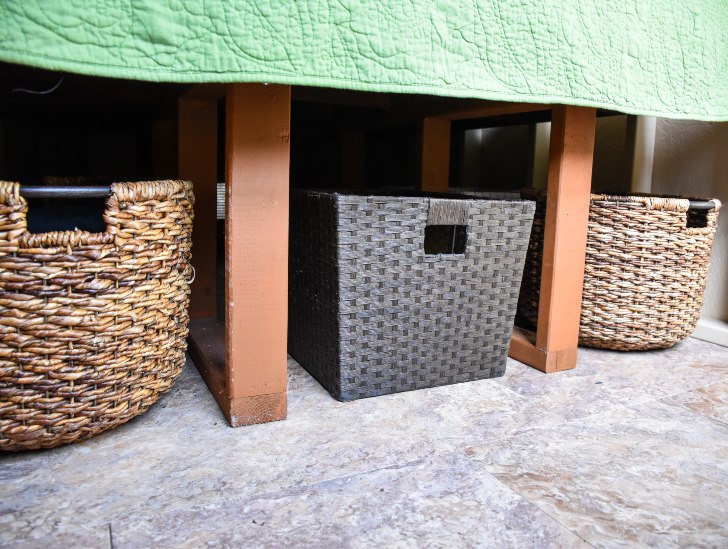
You can also use baskets to ensure proper storage for delicate items as well as ensure perfect breathability. The baskets will keep all the tiny items contained in one place so you can have an easy time finding them later. You can also use stacking bins to store much smaller items such as weights, bands, and bungees. Make larger storage containers for yoga mats, so you don’t have to squeeze them so much.
Summary
Storing your gym equipment can be easy and hard based on how you organize yourself. This will also depend on the type of home workout equipment you have. Remember, it doesn’t matter the size of your home or the number of equipment you have. What matters is how you organize yourself and the flexibility of your gym equipment in the storage.
Every space in your home can turn out to be lucrative storage spaces for your precious gym items. You can utilize the walls, the ceiling, or the door. Also, don’t forget to consider your safety and that of your items when storing. Don’t hang heavy items on the ceiling as they can fall on you and cause injuries. Also, ensure you prepare, clean, dry, and lubricate your equipment appropriately before storage.
After utilizing all your home storage space and still have more items to put away, consider storing in a self-storage unit. This works best for the equipment you no longer use or damaged ones that you don’t plan on repairing soon.