Unveiling the Truth: The Real Price of Storing Your RV! Join us on a thrilling exploration into the world of RV enthusiasts and discover the untold story behind the soaring popularity of these adventure machines.
From unforgettable road trips to dreamy vacations, RVs offer a world of possibilities. But wait, there’s a hidden challenge that awaits every RV owner—the quest for the perfect storage solution. Brace yourself as we dive deep into the realm of RV storage, unraveling the secrets and costs that await. Get ready to embark on an eye-opening journey that will leave you equipped with the knowledge you need. Let’s unveil the true cost of storing your beloved RV!
So, how much does it cost to store an RV? Typically, the RV storage cost depends on many factors, such as the size of the vehicle, location, and the type of storage. Depending on where you live, it will cost you anything between $30 and $500 per month to store your RV. Indoor RV storage costs average $75 per month, outdoor RV storage costs average $50 per month, while covered RV storage rental costs are approximately $60 per month.
Relatively lower storage costs only cover the basics of outdoor and covered storage units. However, RV storage facilities that provide indoor storage solutions with a wide range of other services and amenities tend to charge a little bit more.
This post discusses everything you need to know about how much it costs to store an RV. So, let us get started.
Understanding RV Classes and Their Storage Needs
Before we dive deep into discussing the cost of storing an RV, let us figure out the different RV classes, what size of storage they need, and the type of storage they can have.

1. Class A RV Storage
Recreational vehicles that fall into this category are usually large and can be up to 50 feet long. They can accommodate up to eight people counting the couch, chair room, and bed. A class A RV will typically feel like home since it has a bathroom, driving space, dining space, sleeping space, kitchen, and dining area.
So, they basically have everything you need to be comfortable. While class A motorhomes offer so much convenience, finding a space to store such a big car can be difficult.
In most cases, class A RVs are stored in outdoor storage spaces or the driveway because most of them are too long for indoor storage facilities. There are only a few indoor storage facilities where you can find spaces long enough to accommodate RVs that fall into this category.
2. Class B RV Storage
Most RVs that fall into this category are quite small in size and mainly comprise airstreams and vans. Class B RVs are designed to accommodate two or three people depending on how large the sleeping area is.
Since they are small, they can be stored in both indoor and outdoor storage facilities. Since they are also less expensive than Class A RVs, most people are comfortable splurging for an indoor storage facility with many extra amenities.
3. Class C RV Storage
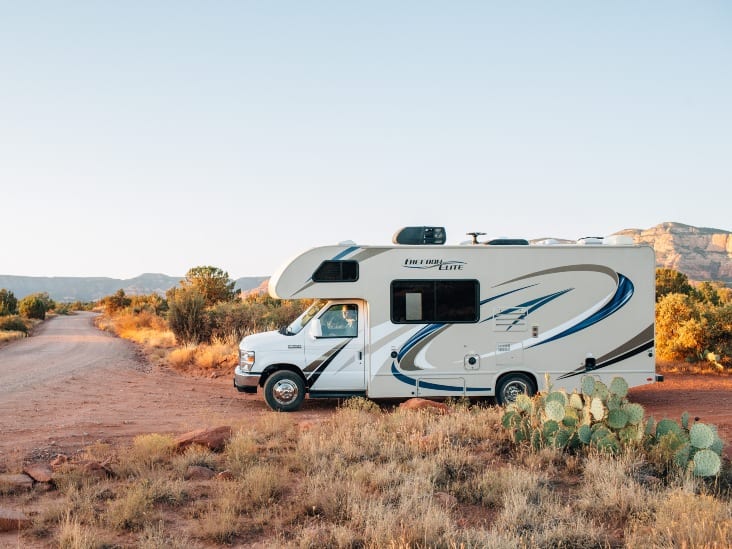
Class C RVs are in between Class A and Class B RVs. You will often see these RVs attached to the back of pickup trucks. They are relatively large but not as large as Class A RVs and can accommodate up to four people depending on the style.
They come in varying sizes meaning that the storage unit size will also vary. However, most of them fit nicely in outdoor storage facilities and covered storage options. Indoor storage options may also be available if the size of the RV permits.
Different RV Storage Options and How Much They Cost
Now that we understand the different types of RVs and their storage needs, let us discuss the three different types of RV storage options available and how much each of them costs.
1. Outdoor Storage Option
Outdoor RV storage is essentially an open parking lot with some security. Depending on the outdoor storage facility, the parking surface will be made of asphalt, concrete, or gravel. However, your RV will remain exposed to harsh weather elements such as rain, wind, snow, and sun.
Outdoor storage options are usually less expensive than indoor and covered storage options and are reasonably practical for large RVs.
In terms of security, outdoor storage options are generally secure. Most of them have high walls, keypad entry gates, security cameras, and other security features. Generally, your RV will be safe from almost everything except the weather.

If you live in an area where extreme weather is not a big issue, then this is probably the best option for you because it will save you a lot of money in the long run. But if you live in an area that experiences extreme weather conditions, you should think twice before choosing an outdoor storage option for your RV.
In terms of cost, outdoor RV storage units cost anything between $30 and $250 per month. The price range is high because the rental cost depends on a wide range of factors such as your location, availability of space, and RV size.
2. Indoor Storage Option
Indoor storage is always the best option for your RV because it gets maximum protection from harsh weather elements. There is no chance of paintwork fading in the hot sun or hail damaging the panels during winter.
The indoor storage can either be shared or private. Shared indoor storage is usually a large garage that can hold multiple RVs, campers, trailers, airstreams, and vans. In this case, you will be sharing the storage space with other tenants, but you will have your own parking spot.
Private indoor storage offers the most protection to your RV, but it is also the most expensive option. A climate-controlled RV storage unit is even more costly.

Besides the cost, the other biggest downfall of the indoor storage option is the size. In most cases, the units are smaller and cannot fit Class A RVs quite well.
In terms of price, you are looking at anything between $60 and $500 for a single indoor storage unit. Prices may even be higher depending on your location and the exact size of your RV.
Indoor storage options come with maximum security ensuring that no one else has access to your vehicle. Therefore, there is usually no need to remove electronics, batteries, and other accessories from your RV to prevent theft.
3. Covered Storage Option
The covered storage option is a slight step down from the indoor storage. With this type of storage, you will park your RV under an extended carport specifically designed for recreational vehicles. Your RV will get maximum protection possible at a relatively affordable cost.
The cover is meant to protect your RV from harsh weather elements such as the sun’s UV rays which may cause your car’s paintwork to fade. It also protects your vehicle from snow, rain, and hail that may cause extensive damage to its body.

However, you need to keep in mind that covered RV storage doesn’t cover your vehicle completely, and you won’t get the same level of protection as you’d get with indoor storage.
The most incredible thing about the covered storage option is that it offers enough room for any size RV. Some of the security measures implemented in these units include security cameras, keypad entry, and high fences.
In terms of price, the average cost for a covered RV storage unit will be anywhere between $40 and $250 depending on your location and RV size.
How Do You Choose the Best RV Storage Option?
When looking for an RV storage option, your #1 priority should be security because thieves always target RVs to steal expensive electronic equipment. Consider removing all valuables before storage even if the loading and unloading process seems inconvenient.
When you visit a potential storage facility, look for wall fencing, security cameras, and other security gadgets that require the use of personal security codes to allow access to the facility. You should also ensure there are security personnel on duty around the clock.
One of the safest places to store your RV is in a locked, enclosed unit with a climate-control feature. Unfortunately, not all RV self-storage facilities are large enough to accommodate any size RV. That is why some people are forced to park their RVs outdoors.

Parking your RV outdoors isn’t a bad idea, but you need to ensure it is well covered to protect it from the harsh weather elements. For added protection, try to find a storage facility with carport-style parking.
Furthermore, before you pay for the storage cost, ensure you take the exact measurement of the storage unit to ensure it is large enough to hold your RV. There should be sufficient room allowing you to enter and exit comfortably.
Final Thought
RV storage costs tend to vary significantly from place to place depending on a wide range of factors such as RV size, exact location, availability of storage space, and the type of storage option.
Typically, the cost of storing an RV will be high if you choose an indoor storage option. The prices can range from bargain to premium depending on the available features.
Before you pay for an RV storage facility, consider your situation, RV size, rig, climate, and budget. As long as you conduct thorough research and know what you need, you will have plenty of options to choose from.